Well Done, Good and Faithful Servant
Dear brothers and sisters in Christ,
As we approach the end of the liturgical year, the Church continues to remind us of the importance of preparing ourselves for the coming of the Lord. Last Sunday, Jesus taught us through the parable of the ten bridesmaids that we must always be ready. Today, He takes that teaching further by showing us that readiness requires faithfulness, responsibility, and the proper use of what God has entrusted to us.
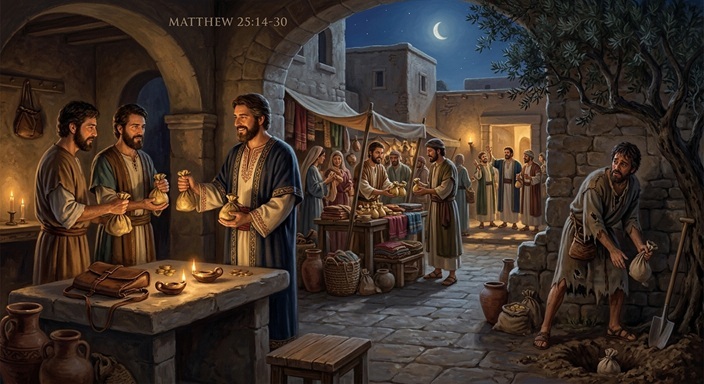
In the Gospel, Jesus tells the parable of a man who travelled to a far country and entrusted his possessions to three servants. To one, he gave five talents; to another, two; and to the third, one. The first two servants worked with what they received and doubled their master's money. However, the third servant buried his talent in the ground and returned it without making any effort to increase it.
When the master returned, he praised the first two servants, saying, "Well done, good and faithful servant." But he condemned the third servant for his laziness.
The first reading from Proverbs speaks about a woman who uses her hands diligently and extends them to the poor and needy. The second reading from St. Paul's First Letter to the Thessalonians reminds us that we are children of light and must remain alert and sober.
Together, these readings teach us that God has entrusted each of us with gifts and responsibilities, and He expects us to use them faithfully.
1. Everything We Have Is Entrusted to Us by God
In the Gospel, Jesus says that the master entrusted his possessions to his servants before travelling. He gave five talents to one, two to another, and one to the third, each according to his ability.
A talent in the parable was a large sum of money. Jesus uses this example to teach us about responsibility and stewardship.
The important thing to notice is that none of the servants received nothing. Each was entrusted with something.
This reminds us that everything we have comes from God. Our lives, time, abilities, opportunities, resources, positions, and responsibilities are gifts that we must use wisely.
Sometimes, we make the mistake of thinking that what we have belongs to us absolutely. We may believe that our money, position, knowledge, or abilities are entirely for our personal enjoyment. But today's Gospel reminds us that we are stewards, not ultimate owners.
God has placed these things in our hands, and one day we will give an account of how we used them.
The question is therefore not simply how much we have, but what we are doing with what God has given us.
Are we using our gifts to make life better for others? Are we using our opportunities responsibly? Are we using our resources in ways that please God?
2. God Does Not Give Everyone the Same Gifts
One servant received five talents, another received two, and the third received one.
The master did not give all of them the same amount. Each received according to his ability.
This teaches us that God does not distribute gifts and responsibilities in exactly the same way. Some people have many opportunities, while others have fewer. Some have great abilities in certain areas, while others have different strengths.
In our society, we often compare ourselves with others. We look at what another person has achieved and become discouraged because our own progress appears smaller.
We may ask ourselves why someone has more money, greater opportunities, a better position, or more recognition than we do.
But today's Gospel teaches us that the master did not judge the servants by comparing the amount entrusted to them. He judged them by what they did with what they received.
The servant with two talents received the same commendation as the servant with five talents because both were faithful.
Brothers and sisters, God is not asking us to become somebody else. He is asking us to be faithful with what He has placed in our hands.
Do not despise your gifts because they appear small. Do not allow another person's success to make you neglect your own responsibilities.
What matters is that we use what we have faithfully.
3. God Expects Us to Make Our Gifts Fruitful
The Gospel tells us that the servant who received five talents immediately went and traded with them. He gained another five. The servant who received two also worked with his talents and gained another two.
Both servants made efforts to increase what had been entrusted to them.
They did not sit down waiting for opportunities to come to them. They acted responsibly.
This is an important lesson for our Christian lives. God does not give us gifts simply to keep them unused. He expects us to develop them and put them to good use.
If God has given us the gift of teaching, we should use it to educate and guide others. If He has given us the ability to encourage people, we should use it to strengthen those who are discouraged. If He has blessed us with material resources, we should use them responsibly and remember those who are in need.
If we have been entrusted with leadership, we should serve those under our care rather than exploit them.
Even the ordinary responsibilities of daily life provide opportunities to be fruitful. A parent can use the opportunity of raising children to teach them honesty and good values. A worker can demonstrate integrity through diligent service. A Christian can use personal time to pray, help others, and participate faithfully in the life of the community.
The message is clear: God expects us to do something meaningful with what He has given us.
4. The Danger of Fear, Laziness, and Inaction
The third servant received one talent, but instead of putting it to work, he dug a hole and buried it.
When the master returned, the servant explained that he had acted out of fear.
He said:
"I was afraid, and I went off and hid your talent in the ground." (Matthew 25:25)
This servant did not lose the talent through a bad investment. He did not use it at all.
His failure was that he allowed fear and inaction to prevent him from fulfilling his responsibility.
This can happen in our own lives. Sometimes, God gives us opportunities, but we refuse to act because we are afraid of making mistakes.
We may have the ability to help someone, but we refuse because we are afraid of inconvenience. We may have an opportunity to serve in the Church, but we avoid it because we do not want responsibility. We may know what is right, but we remain silent because we are afraid of what others will say.
There are also people who have the ability to do good but continually postpone it. They wait for a more convenient time, a better opportunity, or more favourable circumstances.
Eventually, the opportunity passes.
Today's Gospel warns us that doing nothing with what God has entrusted to us is not faithfulness.
We must not allow fear, laziness, or excuses to prevent us from fulfilling our responsibilities.
5. Faithfulness Is More Important Than the Size of Our Achievement
When the master returned, the servant who received five talents presented another five, while the servant who received two presented another two.
Both received the same commendation:
"Well done, my good and faithful servant." (Matthew 25:21)
This is very significant. The servant with two talents was not considered less faithful because he gained less than the servant with five.
The master praised both because they had been faithful with what they received.
This teaches us that God is interested in our faithfulness, not merely in the outward size of our achievements.
In our world, people often measure success by wealth, influence, popularity, and public recognition. But the Gospel gives us a different measure.
A person who quietly serves others may be more faithful than someone who receives public praise. A parent who patiently raises children in the right way may be doing something very important in the eyes of God. A worker who performs an ordinary duty honestly may be demonstrating great faithfulness.
We should therefore stop measuring our Christian lives only by what people can see.
What matters is whether we are faithful to the responsibilities God has placed before us.
6. The First Reading Shows Us the Value of Diligence and Charity
The first reading from the Book of Proverbs presents the image of a worthy and diligent woman.
It tells us that she works with willing hands, provides for her household, and extends her hands to the poor and needy.
The reading also says:
"She opens her hand to the poor, and reaches out her hands to the needy." (Proverbs 31:20)
This woman is praised not simply because of her appearance or possessions, but because of her character, diligence, and generosity.
Her life demonstrates that faithfulness is expressed through practical responsibilities.
She works diligently, cares for her household, and remembers those who are suffering.
This connects directly with today's Gospel. The servants were expected to use what had been entrusted to them, while the woman in Proverbs demonstrates how gifts and abilities can be used responsibly.
The reading also reminds us that our gifts should not be used only for personal benefit.
If God has blessed us with resources, we should remember the poor. If we have knowledge, we should use it to guide others. If we have strength, we should use it to support those who are weak.
The woman in the first reading teaches us that true worth is reflected in our actions.
7. We Are Children of Light and Must Remain Alert
In the second reading, St. Paul reminds the Thessalonians that they know the day of the Lord will come like a thief in the night.
He tells them:
"For all of you are children of the light and children of the day." (1 Thessalonians 5:5)
St. Paul encourages Christians not to live carelessly or spiritually asleep. Instead, they must remain alert and sober.
This connects with the Gospel because the servants were expected to remain faithful while waiting for their master's return.
The master did not tell them the exact time he would return. Nevertheless, they were responsible for how they conducted themselves in his absence.
In the same way, we do not know when we will stand before God. But we know that we must be ready.
Being children of light means that our lives should reflect the truth and goodness of God. We must not allow ourselves to be controlled by dishonesty, greed, selfishness, or careless living.
We should take our Christian responsibilities seriously, knowing that our time on earth is a gift and that we will one day give an account of how we have lived.
8. One Day, We Must Give an Account to God
At the end of the parable, the master returned and settled accounts with his servants.
This is one of the most important parts of the Gospel. The master eventually returned, and each servant had to explain what he had done with what was entrusted to him.
The first two servants were rewarded, but the third servant was condemned because he failed to fulfil his responsibility.
This reminds us that our earthly lives are not without accountability.
One day, we will stand before God. We will give an account of how we used our time, our opportunities, our resources, and our abilities.
We should therefore examine ourselves regularly.
What have I done with the gifts God has given me? Have I used my position to serve others or to exploit them? Have I used my knowledge to help others or to deceive them? Have I used my resources responsibly? Have I been faithful to my family, my work, and my Christian responsibilities?
We should not wait until the end of our lives before asking these questions.
Every day is an opportunity to become more faithful.
The reward promised to the faithful servants is not simply greater responsibility. It is an invitation to share in the master's joy.
This points us towards the joy of God's Kingdom, which should remain the goal of our Christian journey.
Conclusion: Do Not Bury What God Has Given You
Dear brothers and sisters in Christ, today's readings remind us that God has entrusted each of us with gifts and responsibilities.
The first reading shows us the importance of diligence, generosity, and care for the needy. The second reading reminds us to live as children of light, remaining alert and sober. The Gospel challenges us to use faithfully whatever God has placed in our hands.
Let us not spend our lives comparing ourselves with others. Let us not bury our gifts because of fear. Let us not waste our opportunities through laziness or carelessness.
Instead, let us be faithful in our families, workplaces, communities, and Church. Let us use our abilities to serve others, our resources to help those in need, and our time to grow in our relationship with God.
As we approach the end of the liturgical year, let us remember that the important question is not how much we have received, but how faithfully we have used it.
May we never become servants who hide their gifts and refuse to act. May God give us the courage to work diligently, serve generously, and remain faithful until the end.
And when the Lord comes to settle accounts with us, may we hear those beautiful words:
"Well done, my good and faithful servant. Since you were faithful in small matters, I will give you great responsibilities. Come, share your master's joy." (Matthew 25:21)
Amen.