Be Ready, for You Do Not Know the Day or the Hour
Dear brothers and sisters in Christ,
As we gradually approach the end of the liturgical year, the Church invites us to reflect on the coming of the Lord and the importance of being prepared to meet Him.
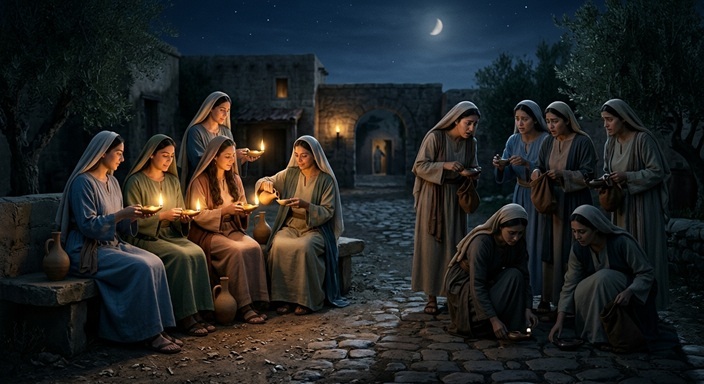
In today's Gospel, Jesus presents the parable of the ten bridesmaids. Five were wise, while five were foolish. They all took their lamps and went out to meet the bridegroom, but only the wise ones came prepared with extra oil. When the bridegroom arrived unexpectedly, those who were ready entered the wedding feast, while the unprepared were left outside.
This parable teaches us that our relationship with God requires constant preparation. We cannot afford to live carelessly, postponing our conversion and spiritual responsibilities until tomorrow.
The first reading from the Book of Wisdom speaks about wisdom, which is readily found by those who seek her. The second reading from St. Paul's First Letter to the Thessalonians reminds us of the hope we have in the resurrection of the dead. Together, these readings teach us to seek God's wisdom, live faithfully, and remain prepared for the coming of the Lord.
1. Wisdom Is Found by Those Who Seek Her
The first reading tells us:
“Wisdom is bright, and does not grow dim. By those who love her she is readily seen, and found by those who seek her.” (Wisdom 6:12)
Wisdom is presented as something precious that must be desired and sought after. It does not come to those who are careless or indifferent. We must make an effort to seek it.
In our daily lives, many people pursue different things. Some pursue wealth, others pursue education, positions, popularity, and material possessions. While these things may have their place, the reading reminds us that we must not neglect the wisdom that comes from God.
There is a difference between being intelligent and being wise. A person may have great knowledge and still make decisions that destroy their relationship with God and other people. True wisdom helps us recognise what is important, distinguish right from wrong, and live according to God's will.
The wise bridesmaids in the Gospel understood the importance of preparation. Their wisdom was demonstrated not merely by what they knew but by the practical steps they took.
Brothers and sisters, are we seeking God's wisdom in our decisions? Do we allow His word to guide our lives, or do we simply follow whatever appears convenient?
We must seek wisdom every day through prayer, reflection, and faithful living.
2. The Oil of Preparation Cannot Be Borrowed
In the Gospel, Jesus tells us that five bridesmaids were wise and five were foolish.
The wise ones took extra oil with their lamps, but the foolish ones did not. When the bridegroom was delayed, all ten became drowsy and fell asleep. At midnight, the announcement came:
“Look! Here is the bridegroom! Come out to meet him.” (Matthew 25:6)
Immediately, they all arose and prepared their lamps. Unfortunately, the foolish bridesmaids discovered that their oil was insufficient.
They asked the wise ones to share their oil, but the wise ones could not do so because there might not be enough for everyone.
This part of the parable teaches us an important lesson: our personal relationship with God is something we must take responsibility for.
Nobody can believe in God on our behalf. Nobody can repent for us. Nobody can live a faithful Christian life in our place.
Our parents may be devoted Christians, our spouses may be prayerful, and our friends may be committed to God, but their faithfulness cannot replace our own response to God's invitation.
We may receive encouragement, prayers, and guidance from others, but each of us must personally cultivate a relationship with God.
We should therefore stop depending entirely on the spiritual commitment of others. We must develop our own prayer life, strengthen our faith, and take responsibility for our salvation.
3. Do Not Postpone Your Preparation
One striking detail in today's Gospel is that the bridegroom was delayed.
The bridesmaids expected him, but they did not know exactly when he would arrive. The delay exposed the difference between those who had prepared adequately and those who had not.
This is also a reality of our Christian journey. We know that we will stand before God one day, but we do not know when that day will come.
Some people live as though they have unlimited time. They postpone prayer, reconciliation, forgiveness, and conversion.
They say, "I will become serious with God when I grow older."
"I will stop this sinful habit when I am ready."
"I will forgive that person someday."
"I will return to church when things become better."
But the question is: How certain are we about tomorrow?
The foolish bridesmaids did not necessarily reject the bridegroom. They were expecting him, but they were not adequately prepared.
This is a warning to Christians who profess their faith but continually postpone the changes they know they need to make.
Do not wait until sickness comes before remembering God. Do not wait until old age before taking your spiritual life seriously. Do not wait until a crisis occurs before seeking reconciliation with those you have offended.
The right time to prepare is now.
4. Our Christian Life Must Be Sustained Every Day
The five wise bridesmaids had extra oil because they understood that the waiting might take longer than expected.
Their preparation reminds us that the Christian life is not something we practise occasionally. It requires consistency and perseverance.
It is not enough to pray only when we have problems. It is not enough to attend Mass only when we need a special favour. It is not enough to remember God only when life becomes difficult.
Our relationship with God must be sustained every day.
We must continue to pray even when our prayers seem unanswered. We must continue to do good even when nobody appreciates us. We must remain faithful even when following God's commandments becomes difficult.
Sometimes, people begin their Christian journey with great enthusiasm but gradually lose interest. They become careless about prayer, distant from the Church, and comfortable with habits that weaken their faith.
Today's Gospel challenges us to remain spiritually prepared, even when the bridegroom appears to be delayed.
We must not allow the passage of time to weaken our commitment to God.
5. The Lord Will Come at an Unexpected Hour
At the end of the parable, Jesus says:
“Keep awake therefore, for you know neither the day nor the hour.” (Matthew 25:13)
Jesus is not simply asking us to avoid physical sleep. In the parable, both the wise and foolish bridesmaids slept while waiting for the bridegroom.
The real difference was that some were prepared and others were not.
To keep awake spiritually means to live with an awareness of God's presence and the responsibility we have before Him.
It means examining our lives regularly, recognising our weaknesses, repenting when we fall, and making a sincere effort to live according to God's will.
We should not live in fear of death or spend our days trying to calculate when the Lord will return. Rather, we should live in such a way that whenever He comes, we are ready to meet Him.
A person who lives faithfully today does not need to be terrified by the uncertainty of tomorrow.
6. We Must Live with Hope in the Resurrection
The second reading from St. Paul's First Letter to the Thessalonians addresses the concern of Christians who were worried about those who had already died.
St. Paul writes:
“We do not want you to be uninformed, brothers and sisters, about those who have died, so that you may not grieve as others do who have no hope.” (1 Thessalonians 4:13)
St. Paul does not say that Christians should never grieve when someone dies. Losing a loved one brings real pain, sadness, and separation.
However, our grief must be different because we believe in the resurrection of the dead.
We believe that Jesus died and rose again. Therefore, those who have died in Christ are not without hope.
St. Paul assures the Thessalonians that those who have died in Christ will not be forgotten when the Lord comes. Both the dead in Christ and those who are still alive will share in the victory of the Lord.
This reading reminds us that death is not the end of our Christian hope.
We may lose loved ones, experience suffering, and face the uncertainty of life, but our faith assures us that God's promise is greater than death.
The hope of the resurrection should therefore influence how we live today. We should not allow temporary things to become more important than our eternal relationship with God.
7. We Must Encourage One Another with This Hope
St. Paul concludes the second reading by saying:
“Therefore encourage one another with these words.” (1 Thessalonians 4:18)
This is an important responsibility within the Christian community.
We are not meant to journey towards God alone. We should encourage one another, especially those who are struggling in faith or grieving the loss of loved ones.
Sometimes, people around us are discouraged by life's difficulties. Some are mourning family members, some are battling serious challenges, and others are beginning to lose hope.
As Christians, we should not add to their suffering through insensitive words or judgment. We should offer comfort, prayers, encouragement, and genuine support.
We should also help one another remain prepared for the coming of the Lord.
Parents should encourage their children to grow in faith. Friends should remind one another of the importance of living rightly. Members of the Christian community should support one another in prayer and good works.
The Christian life is a journey of faith, and we should help one another remain faithful until the end.
Conclusion: Keep Your Lamp Burning
Dear brothers and sisters in Christ, today's readings invite us to examine our spiritual lives.
The first reading encourages us to seek wisdom. The second reading reminds us that we have hope beyond death because of the resurrection of Jesus Christ. The Gospel challenges us to remain prepared for the coming of the Lord.
The question we must ask ourselves is not simply whether we believe that Jesus will come again, but whether our lives show that we are ready to meet Him.
Are we growing in faith? Are we making efforts to overcome our weaknesses? Are we forgiving those who have offended us? Are we living in a way that pleases God? Are we encouraging others to remain faithful?
Let us not be like the foolish bridesmaids who waited until the last moment before discovering that they were unprepared.
Let us seek God's wisdom, strengthen our relationship with Him, and remain faithful in our daily responsibilities.
May we never allow the distractions of this world to extinguish the light of faith in our hearts. May our lamps remain burning, sustained by a life of prayer, faithfulness, and love.
And when the Lord comes, may He find us ready to enter the eternal wedding feast.
As Jesus tells us in today's Gospel:
“Keep awake therefore, for you know neither the day nor the hour.” (Matthew 25:13)
Amen.