Called to Holiness, Promised the Kingdom
Dear brothers and sisters in Christ,
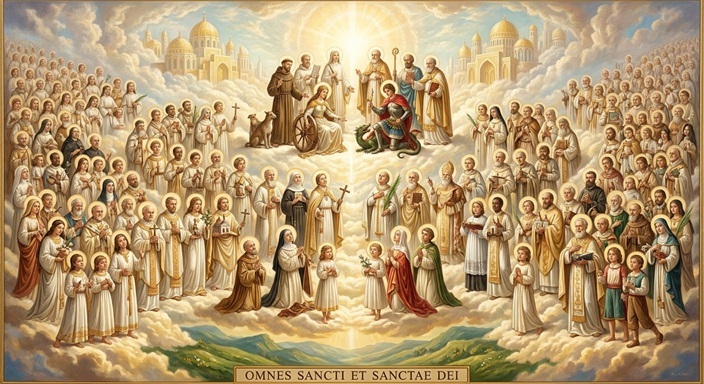
Today, the Church celebrates the Solemnity of All Saints. We honour the countless men and women who lived faithfully in Christ and now share in the glory of heaven. Some are known to us by name; many are known only to God.
The readings remind us that holiness is not reserved for a few extraordinary people. We are God’s children now, and we are called to become more like Him. In the Gospel, Jesus shows us the way of holiness through the Beatitudes: poverty of spirit, mercy, purity of heart, peacemaking, and faithfulness even in hardship. The saints lived this way of life, and their example encourages us to follow Christ.
1. A Great Multitude from Every Nation
In the first reading, John sees “a great multitude, which no one could count, from every nation, race, people, and tongue,” standing before God and the Lamb (Revelation 7:9).
This vision reminds us that holiness is not limited to one people, culture, or background. The saints come from every nation and walk of life. Their lives were different, but they were united in their faithfulness to God.
The reading also tells us that they have come through great trials. Their victory did not mean that they never suffered. Rather, they remained faithful through suffering and were made clean in the blood of the Lamb.
Their example gives us hope. Whatever our background or present struggles, we are invited to join this great multitude by remaining faithful to Christ.
2. We Are God’s Children Now
The second reading declares: “See what love the Father has bestowed on us that we may be called the children of God. Yet so we are” (1 John 3:1).
Our journey towards holiness begins with God’s love. We do not become God’s children by our own strength or achievements; we receive this gift from the Father.
St. John also reminds us that what we shall become has not yet been fully revealed. We have a glorious hope: we shall see God as He is and become like Him.
This hope should shape the way we live today. If we are God’s children, we should seek to reflect His goodness in our words, choices, and relationships. Holiness is not simply about appearing religious. It is about allowing God’s love to transform us.
3. The Saints Show Us the Way of the Beatitudes
In the Gospel, Jesus teaches the Beatitudes. These blessings describe the kind of people who belong to the Kingdom of Heaven.
The world often admires wealth, power, popularity, and success. Jesus points instead to humility, mercy, purity of heart, and the pursuit of righteousness.
The saints understood that the way of Christ may look different from the way of the world. They chose to trust God, to serve others, to seek what is right, and to remain faithful even when it was difficult.
The Beatitudes are not merely beautiful words to admire. They are a way of life that we are called to practise.
4. Blessed Are the Poor in Spirit
Jesus says: “Blessed are the poor in spirit, for theirs is the Kingdom of heaven” (Matthew 5:3).
To be poor in spirit is to recognise our need for God. It means refusing to make pride, possessions, or personal importance the foundation of our lives.
The saints were not people who believed they could do everything by themselves. They knew their need for God’s grace and depended on Him.
We practise poverty of spirit when we pray sincerely, acknowledge our mistakes, accept help when we need it, and use what we have to serve others.
A humble heart makes room for God. It is ready to be taught, corrected, and led by Him.
5. Blessed Are the Merciful and the Peacemakers
Jesus teaches: “Blessed are the merciful, for they will be shown mercy,” and “Blessed are the peacemakers, for they will be called children of God” (Matthew 5:7, 9).
Mercy and peace are central to the life of holiness. The saints were not holy because they lived apart from other people; they showed the love of God in their relationships.
We practise mercy when we forgive, help someone in need, and treat others with compassion. We become peacemakers when we refuse to fuel quarrels, seek reconciliation, and work for understanding.
Peace does not mean pretending that wrongdoing does not matter. It means seeking what is right without hatred, cruelty, or revenge.
Our homes, workplaces, and communities need people who are willing to build peace. The call to holiness begins with the way we treat those closest to us.
6. Blessed Are Those Who Hunger and Thirst for Righteousness
Jesus says: “Blessed are those who hunger and thirst for righteousness, for they will be satisfied” (Matthew 5:6).
To hunger and thirst for righteousness is to desire what is right in God’s eyes. It means caring about truth, justice, and the dignity of others.
The saints did not always find it easy to do what was right. Some faced opposition because they remained faithful to God. Yet they did not abandon the truth simply to gain approval or comfort.
We are called to the same faithfulness in ordinary life: to be honest when dishonesty seems profitable, to act fairly when we have authority, and to stand with those who are treated unjustly.
Holiness is not only what we do in church. It is also the integrity we bring into our daily responsibilities.
7. Blessed Are the Pure in Heart
Jesus says: “Blessed are the clean of heart, for they will see God” (Matthew 5:8).
A pure heart is sincere and directed towards God. It does not seek to appear good while secretly choosing what is evil.
Purity of heart asks us to examine our motives. Why do we help others? Why do we pray? Why do we speak or act in a particular way? Are we seeking God’s glory and the good of others, or only our own praise?
The saints were not without weakness, but they allowed God to purify their hearts. We too can ask God to free us from envy, deceit, bitterness, and selfishness.
A heart that seeks God sincerely begins to recognise His presence in others and to desire what is good.
8. Blessed Are Those Who Suffer for Righteousness
Jesus tells His disciples that those who are persecuted for the sake of righteousness are blessed. He also says that His followers should rejoice when they are insulted or persecuted falsely because of Him.
This does not mean that suffering is good in itself, or that we should seek mistreatment. It means that suffering cannot take away the blessing of belonging to Christ.
The saints remind us that faithfulness may sometimes come at a cost. We may be misunderstood for choosing honesty, mocked for practising our faith, or pressured to abandon what is right.
In such moments, we can remember that God sees our faithfulness. The promise of the Kingdom gives us courage to remain steadfast.
Conclusion: Let Us Follow the Saints on the Way to God
Dear brothers and sisters in Christ, today’s solemnity is both a celebration and a call. We rejoice in the countless saints who have reached the fullness of life with God, and we are encouraged to follow their example.
The first reading shows us the great multitude gathered before the Lamb. The second reminds us that we are already God’s children and are called to become like Him. The Gospel teaches us the way of holiness through the Beatitudes.
Let us not think that holiness belongs only to people whose names are known throughout the Church. Every day, we have opportunities to practise humility, mercy, justice, purity of heart, and peace.
May the saints pray for us, and may their example strengthen us to follow Christ faithfully. May we one day join that great multitude, standing before God and praising Him forever.
As Jesus says in today’s Gospel: “Rejoice and be glad, for your reward will be great in heaven” (Matthew 5:12a).
Amen.