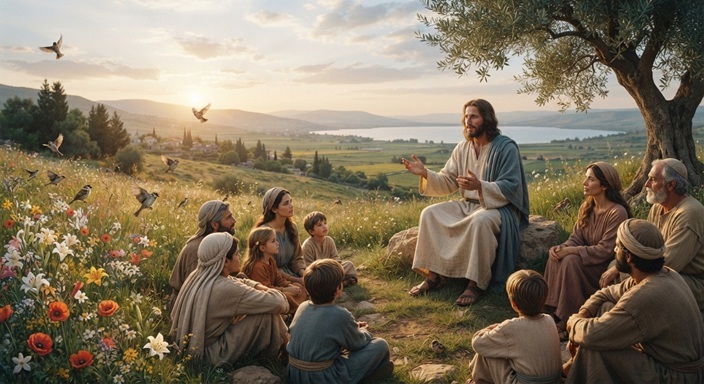
The Beauty of Creation Leads Us to God.
Dear brothers and sisters in Christ,
Today, as we celebrate the World Day of Prayer for the Care of Creation, the readings invite us to look carefully at the world around us and recognize the God who created it.
The first reading from the Book of Wisdom tells us that the beauty and greatness of created things can lead us to know their Creator.
The author says:
“Through the greatness and beauty of creatures their original author, by analogy, is seen.”
Creation therefore points beyond itself.
When we look at the beauty of the world, we are invited to look beyond creation and recognize God.
1. Creation Speaks of Its Creator
The first reading speaks about people who see the beauty and power of creation but fail to recognize the One who created it.
It says:
“If they were able to know so much that they could speculate about the world, how did they fail to find its Lord?”
This is the first lesson of today's celebration.
Creation is not God.
The sun is not God.
The moon is not God.
The stars are not God.
The sea, mountains, trees and animals are not God.
They are creatures.
But they reveal something about the greatness of their Creator.
When we look at creation with eyes of faith, we should be moved from the created things to the Creator.
The beauty of creation should lead us to praise God.
2. Creation Should Lead Us to Wonder
The first reading speaks about the beauty of created things.
Think about the things we see every day.
The rising sun.
The falling rain.
The stars in the night sky.
The variety of plants.
The beauty of flowers.
The complexity of living things.
All these things can awaken in us a sense of wonder.
But sometimes we become so accustomed to them that we no longer notice them.
We see the sunrise but do not wonder.
We drink water but do not give thanks.
We eat food but forget where it comes from.
We see the beauty of nature but fail to recognize the wisdom behind it.
Today's first reading calls us to look again.
To see creation.
To wonder.
And through that wonder, to recognize God.
3. “The Heavens Declare the Glory of God”
The Responsorial Psalm continues this same message.
The Psalmist praises the heavens and the works of God's hands.
Creation becomes a witness to God's glory.
The world around us continually points toward God.
But there is an important question for us:
Are we paying attention?
The Psalm invites us to become people who can recognize God's presence and greatness through His works.
Our response to creation should therefore be more than admiration.
It should become praise.
When we see the beauty of creation, our hearts should say:
“Lord, how great and wonderful are your works!”
4. “You Cannot Serve God and Mammon”
The Gospel takes us in another direction.
Jesus says:
“No one can serve two masters.”
And He concludes:
“You cannot serve God and mammon.”
These words help us understand one of the dangers that can affect our relationship with creation.
We can become so focused on material things that they take the place of God.
We begin to measure everything by what it can give us.
We look at the earth and see only what we can extract from it.
We look at creation and see only what we can possess.
But Jesus reminds us that God must remain our master.
Creation is a gift, but it must never become our god.
Material things are useful, but they must never become the centre of our lives.
5. “Look at the Birds of the Air”
Jesus then tells His disciples:
“Look at the birds of the air.”
And He says:
“Consider the lilies of the field.”
This is remarkable.
Jesus directs our attention to creation.
He wants His disciples to learn something from the birds and the flowers.
The birds do not sow or reap, yet the heavenly Father feeds them.
The flowers do not labour, yet God clothes them beautifully.
Jesus is teaching us about God's providence.
The God who created the world has not abandoned His creation.
He continues to care for it.
And if God cares for the birds of the air and the flowers of the field, Jesus tells us that we can trust that He will care for us even more.
6. Do Not Let Anxiety Become Our Master
Jesus repeatedly tells His disciples:
“Do not worry.”
He asks:
“Can any of you by worrying add a single moment to your span of life?”
Jesus is not telling us that our responsibilities do not matter.
He is teaching us not to allow anxiety and attachment to material things to dominate our lives.
The birds of the air and the flowers of the field remind us that God's providence is greater than our fears.
Jesus therefore says:
“Seek first the kingdom of God and his righteousness, and all these things will be given you besides.”
This is the heart of today's Gospel.
God must come first.
When God is first, everything else finds its proper place.
7. Creation and Trust in God
The first reading invites us to recognize God through creation.
The Psalm invites us to praise Him because of His works.
The Gospel invites us to trust Him.
These three movements belong together:
We see creation.
We recognize the Creator.
We trust the Creator.
When we look at the birds and flowers, Jesus reminds us that creation itself can teach us something about God's providence.
We do not need to live as though everything depends entirely upon our own strength.
We have a Father who knows what we need.
8. “Seek First the Kingdom of God”
Jesus gives us the proper order of our lives:
“Seek first the kingdom of God and his righteousness.”
This is where today's readings ultimately lead us.
The purpose of reflecting on creation is not simply to admire nature.
It is to find our way back to God.
The beauty of creation should lift our minds toward the Creator.
The care God shows toward creation should strengthen our trust in Him.
And our trust in God should free us from becoming slaves to material things.
Creation is therefore a gift that directs our hearts toward God.
Conclusion
Dear brothers and sisters,
Today's readings give us a beautiful reflection on creation.
The Book of Wisdom teaches us to recognize the Creator through the beauty of His works.
The Psalm invites us to praise God for what He has made.
And Jesus, in the Gospel, points us toward the birds of the air and the flowers of the field and teaches us to trust in the providence of our heavenly Father.
The message is simple:
Look at creation.
Recognize the Creator.
Trust in God.
Let us therefore not look at creation with indifference.
Let us look with wonder.
Let us look with gratitude.
And above all, let us allow creation to lead our hearts back to God.
May we never allow the things God has created to take the place of God Himself.
And may we always remember the words of Jesus:
“Seek first the kingdom of God and his righteousness.”
Amen.