Come to the Wedding Feast
Dear brothers and sisters in Christ,
Today’s readings invite us to reflect on God’s invitation, our response to Him, and the importance of preparing ourselves to receive what He offers us.
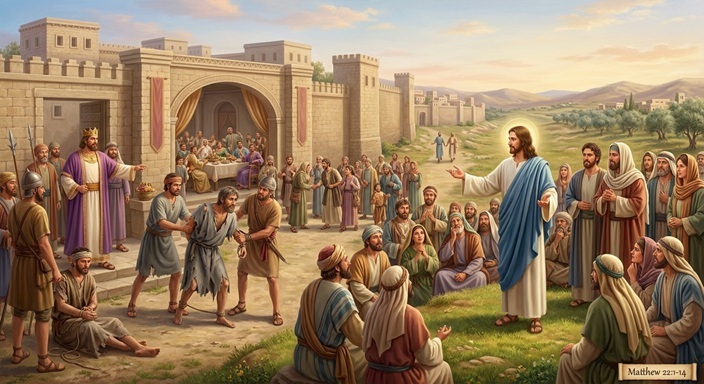
In the first reading, Isaiah speaks of a great feast that the Lord will prepare for all peoples. In the Gospel, Jesus tells the parable of a king who prepares a wedding banquet for his son and invites guests to attend. Surprisingly, many of those invited refuse to come. Others ignore the invitation, while some even mistreat and kill the king’s servants.
The king then extends the invitation to people from the streets, gathering both good and bad until the wedding hall is filled.
Through these readings, Jesus reminds us that God invites us into His kingdom, but we must take His invitation seriously and prepare ourselves to be worthy of it.
1. God Has Prepared a Great Feast for His People
The first reading from Isaiah gives us a beautiful picture of what God desires for His people:
“On this mountain the Lord of hosts will make for all peoples a feast of rich food, a feast of well-aged wines.”
This is an image of abundance, joy, and fellowship.
God does not desire a life of misery for His people. He promises a future in which suffering and death will be overcome.
Isaiah declares:
“He will swallow up death forever. Then the Lord God will wipe away the tears from all faces.”
What a beautiful promise!
The Lord prepares a feast, removes sorrow, and offers hope to His people.
This reminds us that God’s invitation is an invitation to life, joy, and communion with Him.
But if God has prepared such wonderful things for us, we must ask ourselves: Are we willing to accept His invitation?
2. The King Invites His Guests, but They Refuse to Come
In the Gospel, Jesus says that a king prepared a wedding banquet for his son and sent his servants to call those who had been invited.
But they refused to come.
The king sent other servants, explaining that everything was ready.
Yet the invited guests responded differently. One went to his farm, another to his business, and others seized the servants, mistreated them, and killed them.
Their actions reveal a sad reality: people can receive a wonderful invitation and still refuse to accept it.
The king had prepared everything. The guests did not need to prepare the banquet themselves. They only needed to respond.
Yet they allowed other things to take priority.
This challenges us to examine our own lives.
God calls us to Himself, but sometimes we become so occupied with our daily activities, ambitions, possessions, and personal concerns that we neglect His invitation.
Work is important. Our businesses are important. Our responsibilities are important. But none of these should become an excuse for completely neglecting God.
3. Do Not Allow the Things of This World to Make You Ignore God
The Gospel tells us that one guest went to his farm and another to his business.
There was nothing necessarily wrong with having a farm or conducting business. The problem was that they allowed these activities to take precedence over the king’s invitation.
This is a warning for us.
Sometimes we say we are too busy to pray, too busy to attend to God's word, too busy to reconcile with someone, or too busy to fulfil our Christian responsibilities.
We may have time for many other things but struggle to make time for God.
The question is not whether we have responsibilities. We all do.
The question is whether we have allowed our responsibilities to push God out of our lives.
God should not receive only the little time and attention left over after everything else.
We must learn to put Him in His rightful place.
4. The Invitation Is Extended to Everyone
After the first guests refuse the invitation, the king tells his servants:
“Go therefore into the main streets, and invite everyone you find to the wedding banquet.”
The servants go out and gather everyone they find, both good and bad.
This is a powerful message.
The king does not restrict the invitation to a small group of people. He opens the doors and invites others to take the place of those who refused.
God’s invitation is not limited to people who consider themselves perfect, important, or worthy.
He calls people from different backgrounds and circumstances.
This should give us hope.
Perhaps we have made mistakes. Perhaps our lives have not been what they should be. Perhaps we have neglected God for a long time.
The Gospel reminds us that we should not automatically consider ourselves excluded.
God continues to invite us.
However, we must respond to that invitation rather than take it for granted.
5. The Wedding Garment: We Must Prepare Ourselves
One of the most striking parts of the Gospel comes when the king enters the wedding hall and sees a man who is not wearing a wedding garment.
The king asks him:
“Friend, how did you get in here without a wedding garment?”
The man is speechless, and the king orders that he be thrown outside.
This part of the parable reminds us that accepting God's invitation is not merely about showing up. It also involves being prepared for what the invitation requires.
The wedding garment represents the need for a life that is appropriate to our calling. We cannot claim to belong to God's kingdom while deliberately refusing to let His will shape our lives.
We cannot say that we have accepted God's invitation while remaining completely unwilling to change.
Our response must be sincere.
We must allow God's word to influence our choices, our conduct, and our relationships.
It is not enough to enter the wedding hall; we must also be prepared to participate in the feast.
6. “Many Are Called, but Few Are Chosen”
Jesus concludes the parable with these words:
“For many are called, but few are chosen.”
These words remind us of the seriousness of God's invitation.
Being invited is a privilege, but we must respond faithfully.
We should never assume that because we belong to a Christian family, attend church, or know the teachings of our faith, we have nothing more to do.
The invitation requires a personal response.
Each of us must examine our own life.
Are we simply hearing God's word, or are we allowing it to transform us?
Are we content with the appearance of being religious, or are we sincerely seeking to live according to God's will?
The parable warns us against taking our calling for granted.
7. The Lord Will Wipe Away Every Tear
The promise in Isaiah offers us another reason to accept God's invitation.
The prophet says:
“He will wipe away the tears from all faces.”
God's promise gives us hope, especially when life is difficult.
We experience suffering, disappointment, loss, and uncertainty. Sometimes we wonder whether our struggles will ever end.
Isaiah reminds us that God has prepared a future beyond our present suffering.
The Lord will destroy death, remove disgrace, and bring His people into the joy He has promised.
This hope should encourage us to remain faithful.
We should not allow the difficulties of life to make us abandon God's invitation.
The feast God promises is greater than the temporary struggles we experience.
8. “I Can Do All Things Through Him Who Strengthens Me”
In the second reading, Paul speaks about the different circumstances he has experienced. He has known both abundance and need, yet he has learned to face them through the strength Christ gives him.
He says:
“I can do all things through him who strengthens me.”
Paul's words remind us that our circumstances should not determine our faithfulness to God.
Whether we are enjoying prosperity or experiencing hardship, we can continue to trust in the Lord.
Sometimes we become so concerned about our problems that we forget the God who invites us to His feast.
At other times, when everything is going well, we become comfortable and forget our dependence on Him.
Paul teaches us to remain grounded in Christ in every situation.
Our wealth should not make us forget God, and our suffering should not make us abandon Him.
9. Learn to Be Content and Trust in God's Providence
Paul also tells the Philippians that he has learned to be content in whatever circumstances he finds himself.
This is a valuable lesson for us.
Many people postpone their relationship with God because they believe they must first become wealthy, successful, or free from every problem.
Others become so consumed by the desire for more that they have little time for God.
But Paul's experience teaches us that our relationship with Christ does not have to wait until life becomes perfect.
We can serve God in prosperity and in difficulty.
We can pray when we have much and when we have little.
We can remain faithful while working to improve our circumstances.
The important thing is not to allow our circumstances to become an excuse for ignoring God's invitation.
Conclusion
Dear brothers and sisters in Christ,
Today's readings present us with a wonderful invitation.
In Isaiah, the Lord prepares a feast for all peoples and promises to wipe away their tears.
In the Gospel, the king invites guests to the wedding banquet of his son. Some refuse, others ignore the invitation, and still others accept it without being properly prepared.
In the second reading, Paul reminds us that Christ gives us strength in every circumstance.
The message is clear: God invites us to share in His kingdom, but we must respond to Him sincerely and faithfully.
Let us not be so occupied with our farms, businesses, possessions, and personal ambitions that we forget the One who invites us.
Let us not assume that simply belonging to the Church means we have nothing more to do.
Instead, let us accept God's invitation and prepare ourselves through a life that reflects His will.
Let us ask ourselves:
Have I been taking God's invitation seriously?
What have I allowed to take God's place in my life?
Am I preparing myself to share in the feast He has promised?
May we never reject the invitation of the Lord through indifference, selfishness, or neglect.
May we remain faithful to Christ in times of abundance and in times of need.
And when the Lord calls us to His eternal banquet, may He find us ready to take our place.
Amen.